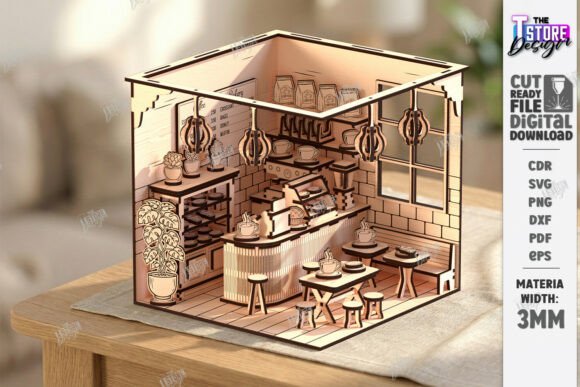
Mini Coffee Shop Roombox Laser Cut CNC: A Practical Graphic Design Asset for Creative Sellers
As an experienced digital product creator who’s spent years building and refining assets for platforms like Etsy, Shopify, and print-on-demand services, I’m always on the lookout for high-quality design elements that offer both versatility and visual appeal. Recently, I came across Mini Coffee Shop Roombox Laser Cut CNC, a 3D laser-cut model kit with a unique blend of charm and functionality. In this review, I’ll walk you through my first impressions, how it can be applied in real selling scenarios, and what to consider before using it commercially.
First Impressions: Nostalgic Yet Modern
The Mini Coffee Shop Roombox Laser Cut CNC immediately caught my eye with its detailed structure and warm aesthetic. It’s designed as a miniature coffee house or bakery diorama, complete with furniture, signage, and layout options. The files are SVG-ready, making them compatible with most laser cutting software and tools like Cricut or Silhouette. Its visual personality leans toward handmade charm with a touch of modern elegance—perfect for those targeting cozy, lifestyle-oriented audiences.
This asset feels especially appealing to sellers focusing on small business branding, handmade businesses, or niche markets like home décor, café culture, or creative hobbies. The design is clean enough for professional use but still carries the warmth of something crafted by hand. That balance makes it versatile for both decorative and commercial applications.
Real-World Applications for Digital Sellers
When evaluating a new graphic design asset, I always ask: where can this actually sell? The Mini Coffee Shop Roombox Laser Cut CNC has several strong points:
- SVG products: Ideal for laser cutting into wood, acrylic, or other materials. Great for creating custom wooden room boxes or display models.
- Printable wall art: The intricate details work well when rendered as flat illustrations or layered PNGs for framed prints or canvas art.
- Planner stickers: If simplified, the coffee shop elements could make cute, thematic stickers for planners or journals.
- Greeting cards and invitations: Use the characters or café scenes as part of a seasonal card collection, especially around holidays or birthdays.
- T-shirt graphics: Extract key components like the logo or barista character to create whimsical apparel designs.
- Mug and tumbler wraps: The artwork translates well to small-scale prints, adding personality without overwhelming the design space.
- Canva templates: Integrate the coffee shop visuals into social media posts, blog headers, or promotional banners for lifestyle brands.
- Cricut projects: With proper file optimization, the design works well for layered paper crafts or mixed-media layouts.
- Digital paper packs: Break down the elements into smaller motifs for scrapbooking kits or journaling layouts.
- Product mockups: Use the 3D aspect as part of your digital mockup library to showcase packaging or retail environments.
What stands out is how this design supports visual storytelling. It doesn’t just look good—it tells a story about community, comfort, and craftsmanship. That kind of narrative is powerful for creative marketplace listings and brand identity development.
Testing the Asset Before Launch
Before publishing any design as a digital download or using it in a print-on-demand listing, I always test it across multiple formats and sizes. Here's how I evaluated the Mini Coffee Shop Roombox Laser Cut CNC:
- Mockup previews: I placed the design in a variety of product mockups—wooden dioramas, mugs, tote bags—to see how it scales and holds up visually.
- Thumbnail appeal: The detail-rich nature of the coffee shop scene is a double-edged sword. While beautiful, it needs careful cropping or simplification to avoid looking cluttered in thumbnails.
- Background compatibility: I tested the PNG version on both white and dark backgrounds. The colors pop nicely on light tones, while some elements lose contrast in darker settings.
- SVG cut quality: When preparing for laser cutting, I inspected the layers and lines. The design is precise, but complex overlapping areas may require extra attention during setup.
- Color accuracy: For print-based products, I ran color tests to ensure the final output matched the original design, especially with gradients or shading.
- File resolution: The PNGs were crisp at 300dpi, which is essential for maintaining quality in printed goods or digital downloads.
Where This Design Shines
Some of the best uses for the Mini Coffee Shop Roombox Laser Cut CNC include:
- Large product previews: The complexity and depth of the design really come to life in bigger images, such as full-page product showcases.
- Themed bundles: Combine this with related assets like coffee cups, pastries, or café signs to create cohesive design bundles.
- Decorative layouts: Use it as a background element in printable greeting cards or nursery wall art for a charming focal point.
- Merchandise graphics: Especially effective on items like mugs, phone cases, or tote bags where a subtle yet detailed motif adds value.
- Visual consistency: If you're building a brand identity around cafés or cozy spaces, this design helps maintain a consistent visual language across your product line.
Where to Proceed with Caution
While this design is impressive, there are certain limitations to be aware of:
- Tiny sticker details: The fine lines and textures may not translate well to very small sticker sizes, leading to lost detail.
- Overly complex layouts: If used in conjunction with too many other elements, the design can become busy and lose its impact.
- Low-resolution printing: Avoid using it on low-quality print substrates unless you simplify the layers significantly.
- Crowded thumbnails: As mentioned earlier, the design benefits from being cropped tightly or isolated to key elements for better thumbnail performance.
- Dark backgrounds: Without sufficient contrast adjustments, parts of the design may fade or disappear against darker tones.
- Text-heavy templates: Don't layer too much text over the design. It can distract from the illustration and reduce readability.
- Clean cutting lines: For Cricut or Silhouette users, verify that all paths are closed and optimized for accurate cutting.
Pairing Suggestions for Maximum Impact
To make the most of this asset, consider pairing it with the right typography styles. Based on my experience, these fonts complement the mood of the Mini Coffee Shop Roombox Laser Cut CNC:
- Serif font: Adds a classic, elegant feel, perfect for upscale branding or packaging design.
- Sans serif font: Keeps things clean and modern, great for minimalist product titles or digital paper packs.
- Script font: Enhances the personal, artisanal vibe of the design—ideal for greeting cards or invitation templates.
- Handwritten font: Reinforces the “DIY” aspect of the design, useful for crafting kits or themed planner stickers.
- Display font: Can be used sparingly for headlines or labels within the roombox itself, giving a stylized touch without overpowering the illustration.
Commercial Licensing and File Organization
One of the most important checks for any digital seller is confirming whether the asset comes with a valid commercial license. Always read the licensing terms carefully—especially if you plan to use it in sublimation designs, product mockups, or branded merchandise. If you’re planning to resell the design as-is (like in an Etsy product or a digital download), make sure the license allows for redistribution.
Also, organize your files clearly. Separate the Laser Cutting files from the Art Amp illustrations. Label each component so customers can easily access what they need—whether it’s a full roombox set or just the counter and chairs. Clear organization builds customer trust and reduces support inquiries, which is crucial for a professional-looking online product collection.
Final Thoughts for Creative Entrepreneurs
The Mini Coffee Shop Roombox Laser Cut CNC is more than just a fun design—it’s a strategic asset for sellers aiming to tap into the cozy, lifestyle, and hobbyist markets. Whether you're launching a new printable design line, expanding your clipart bundle offerings, or experimenting with 3D puzzle B type kits, this asset brings a level of polish and personality that can elevate your store's visual hierarchy.
However, success with this design depends on thoughtful application. Test it thoroughly, know your audience, and use it in ways that highlight its strengths. Done right, it can help build a stronger brand presence, improve perceived value, and increase click-through potential on marketplaces like Etsy or Creative Fabrica.
If you're a digital product creator, blogger, or content designer, this one’s worth considering—but also worth testing. It’s a solid addition to your design toolkit, especially if you're working in the lifestyle, home décor, or DIY niches.